Solar Street Light Buying Mistakes to Avoid for Smart Investments
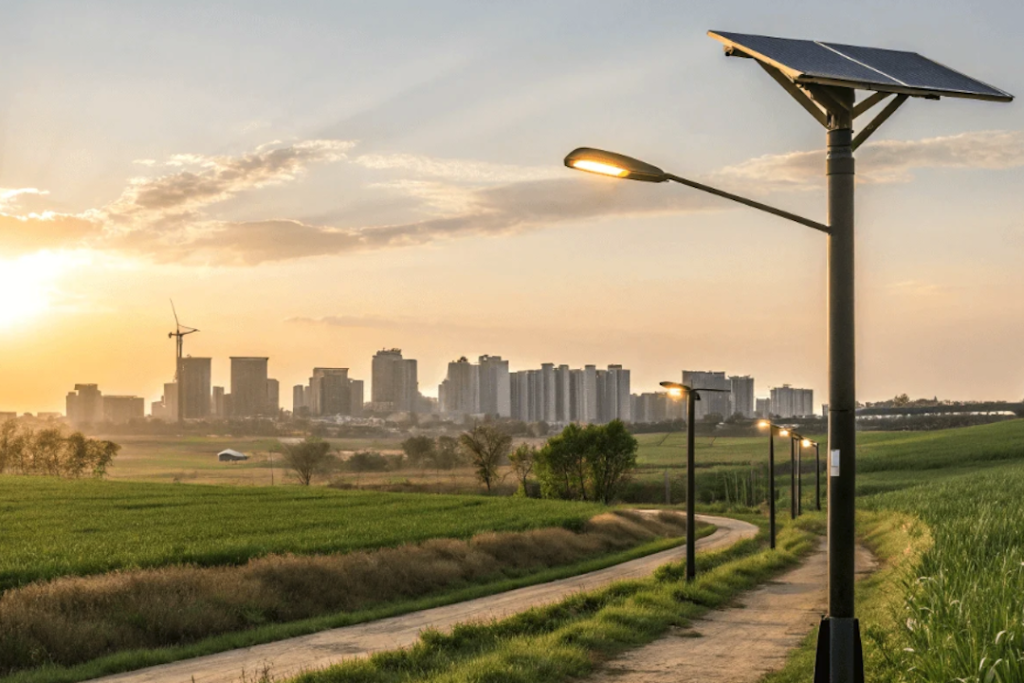
Solar street lights offer a fantastic way to illuminate areas without the hassle and cost of trenching power lines. However, jumping into a purchase without understanding some key pitfalls can quickly turn a smart investment into a frustrating and expensive mistake. The biggest mistake often boils down to prioritizing a low upfront cost over long-term performance and reliability. To make sure you’re getting the most out of your solar street light investment, let’s unpack some common missteps and how to sidestep them.
Overlooking Site-Specific Needs and Environmental Factors
Many buyers make the critical error of treating solar street lights Funkskitchen as a one-size-fits-all solution. The reality is that the effectiveness of these lights is heavily dependent on the specific environment they’re placed in. Ignoring these factors can lead to lights that are either constantly dim, don’t last through the night, or fail prematurely.
Ignoring Solar Irradiance Levels
This is perhaps the most fundamental oversight. Solar irradiance refers to the amount of solar power received per unit area. It varies significantly based on geographic location, time of year, and even local weather patterns. A light designed for a sunny desert environment will simply not perform adequately in a region known for frequent overcast days or shorter winter daylight hours. Without checking average daily peak sun hours for your specific location, you’re essentially guessing at the power requirements. Manufacturers often specify the minimum peak sun hours needed for their systems to charge fully and operate as intended. Failing to match this to your site’s reality is a recipe for underperformance.
Neglecting Shading Obstructions
Even in areas with high solar irradiance, shading can drastically reduce a solar panel’s efficiency. Trees, buildings, utility poles, and even nearby signs can cast shadows on the solar panel at various times of the day, particularly during critical charging hours. A small shadow across just one part of a panel can significantly decrease its overall power output due to the way solar cells are wired. Before purchasing, it’s crucial to conduct a thorough site survey to identify any potential shading issues. This might involve observing the site at different times of the day throughout a year, if possible, or using solar pathfinder tools to predict shadow patterns.
Underestimating Local Climate Conditions
Beyond just sunlight, local climate plays a huge role. Extreme temperatures, both hot and cold, can affect battery performance and longevity. High humidity can accelerate corrosion of components if not properly sealed. Heavy winds might require more robust pole mounting solutions than a standard setup. Areas prone to heavy snowfall will need panels mounted at an angle that allows snow to slide off easily, preventing accumulation that blocks sunlight. Dust and sand can accumulate on panels, reducing efficiency, so easy-to-clean designs or more frequent maintenance might be necessary. Understanding these environmental stressors helps in selecting lights with appropriate IP ratings, temperature tolerances, and mechanical stability.
Forgetting About Soil and Ground Conditions
While not directly impacting the light’s performance, the ground conditions are critical for its installation and long-term stability. Rocky soil, sandy soil, or areas with high water tables require specific foundation designs that might be more complex or expensive than a standard concrete footing. Ignoring these can lead to leaning poles, instability, or even collapse, requiring costly rework. It’s wise to consider a geotechnical assessment for larger installations or in areas with known challenging ground conditions.
Making Poor Component Quality and Specification Choices
The internal components of a solar street light are its heart and soul. Skimping on these, or not understanding their specifications, is a very common mistake that leads to premature failure, inconsistent lighting, and ultimately, wasted money. A cheap light often means cheap components, and that rarely translates to reliable, long-lasting performance.
Compromising on Battery Capacity and Type
The battery is arguably the most critical component, determining how long the light can operate without sunlight. Many buyers focus solely on the wattage of the LED fixture and forget about the battery’s ability to power it. A common mistake is selecting a battery with insufficient capacity to provide illumination for the required duration, especially during consecutive cloudy days (autonomy). You need to calculate the necessary battery capacity based on the daily power consumption of the LED, multiplied by the desired autonomy (typically 3-5 days).
Furthermore, the type of battery matters. While lead-acid batteries are cheaper upfront, they have a shorter lifespan, are heavier, and are less efficient in extreme temperatures. Lithium-ion batteries (LiFePO4 being a popular choice for solar lights) offer significantly longer lifespans (thousands of cycles), higher energy density, and better performance across a wider temperature range. Although more expensive initially, their longevity often makes them more cost-effective in the long run. Buying a light with an undersized or low-quality battery guarantees dimming or complete failure after just a few hours.
Selecting Undersized or Inefficient Solar Panels
The solar panel’s job is to charge the battery. If it’s too small or inefficient, the battery will never fully charge, leading to reduced operational hours. The panel’s wattage needs to be appropriately sized to replenish the battery’s daily discharge, taking into account peak sun hours for your location and system losses. A common mistake is choosing a panel that barely meets daily requirements, leaving no buffer for cloudy days or seasonal variations.
Moreover, the quality of the solar panel itself is crucial. Cheap panels might have lower conversion efficiencies, meaning they produce less power per square foot, or degrade faster over time. Look for panels from reputable manufacturers with good warranties and certifications (e.g., TUV, CE). Monocrystalline panels generally offer higher efficiency in a smaller footprint compared to polycrystalline, which can be important where space is limited.
Ignoring the LED Luminaire’s Quality and Specifications
While the LED itself determines the light output, buyers often get fixated on a high “wattage” figure without understanding what that really means. A high-wattage LED doesn’t necessarily mean more useful light. The efficiency (lumens per watt), beam angle, color temperature (CCT), and CRI (Color Rendering Index) are all vital.
A common mistake is buying a fixture with a very wide beam angle when a more focused light is needed, or vice-versa. This leads to light spill where it’s not wanted and insufficient illumination where it is. Choosing an appropriate color temperature (e.g., 4000K-5000K for general street lighting, 2700K-3000K for aesthetic or residential areas) is also important for comfort and compliance. Low-quality LEDs might have poor thermal management, leading to rapid lumen degradation or early failure. Always check for reputable LED chip manufacturers (e.g., Philips, Osram, Cree) and robust housing materials with good heat dissipation.
Neglecting the Importance of the Charge Controller
The charge controller is the “brain” of the solar light system, protecting the battery from overcharging and over-discharging, both of which drastically reduce its lifespan. There are two main types: PWM (Pulse Width Modulation) and MPPT (Maximum Power Point Tracking).
PWM controllers are simpler and cheaper but less efficient, especially in colder temperatures or when the solar panel voltage significantly differs from the battery voltage. MPPT controllers are more sophisticated, tracking the maximum power point of the solar panel to extract up to 15-30% more power, leading to faster charging and better performance. A common mistake is choosing a light with a basic PWM controller when an MPPT controller would significantly improve overall system efficiency and battery longevity, especially for larger or more critical applications. A poorly designed or low-quality charge controller can kill a good battery quickly, negating any investment in quality components.
Underestimating Installation and Maintenance Requirements
Many people assume solar street lights are a “set it and forget it” solution. While they generally require less intervention than grid-tied lights, neglecting proper installation and planned maintenance can lead to reduced performance, premature failure, and unexpected costs. This oversight can quickly erode the perceived savings.
Cutting Corners on Pole and Foundation Sizing
The pole supporting the solar light system needs to be robust enough to withstand local wind loads, the weight of the fixture, and the solar panel. A common mistake is using an undersized or poorly constructed pole to save costs. This can lead to structural failure, especially in areas with high winds, posing a significant safety hazard and requiring costly replacement.
Similarly, the foundation for the pole must be adequately sized for the soil conditions and expected loads. Skimping on foundation depth or diameter can result in leaning poles or instability over time. It’s crucial to consult local building codes and engineering specifications for proper pole and foundation design, rather than just guessing.
Ignoring Proper Wiring and Connection Practices
While many solar street lights are integrated units, some larger systems might involve separate components (panel, battery box, luminaire). Poor wiring practices, such as using undersized cables, improper insulation, or non-weatherproof connectors, can lead to voltage drops, fire hazards, or moisture ingress causing shorts and component failure. All connections must be secure, corrosion-resistant, and properly sealed to the manufacturer’s specifications. A seemingly minor issue like a loose connection can lead to intermittent operation or complete system shutdown.
Forgetting About Regular Cleaning of Solar Panels
Solar panels are most efficient when clean. Dust, dirt, bird droppings, pollen, and leaves can accumulate on the panel’s surface, significantly reducing its ability to absorb sunlight. A common mistake is neglecting to schedule regular cleaning, especially in dusty environments or areas with heavy foliage. While rain can help, it’s rarely sufficient to remove stubborn grime. Depending on the environment, panels might need cleaning anywhere from a few times a year to monthly. This is a simple maintenance task but crucial for optimal performance.
Overlooking Battery Health Monitoring and Replacement
Batteries, even high-quality ones, have a finite lifespan. While lithium-ion batteries last significantly longer than lead-acid, they will eventually degrade. A major oversight is failing to monitor battery health or plan for eventual replacement. As batteries age, their capacity diminishes, leading to reduced autonomy. Ignoring this means the light will perform poorly or fail prematurely. For larger installations, it’s wise to implement a battery monitoring system or at least schedule periodic checks of battery voltage and performance. Planning for battery replacement every 5-10 years (depending on type and usage) should be factored into the long-term budget.
Neglecting Software and Firmware Updates (for Smart Lights)
With the rise of smart solar street lights that incorporate IoT functionality, remote monitoring, and adaptive lighting profiles, overlooking software and firmware updates can be a mistake. These updates often improve efficiency, fix bugs, enhance security, or add new features. Just like any smart device, a smart solar light system can benefit from periodic software refreshes. Failing to do so can leave the system vulnerable or prevent it from operating at its peak potential.
Focusing Solely on Price and Ignoring Total Cost of Ownership
It’s natural to look for a good deal, but an overly aggressive focus on the lowest upfront price for solar street lights often leads to a much higher total cost of ownership (TCO) in the long run. The initial purchase price is just one piece of the puzzle.
Prioritizing Lowest Bid Over Quality and Reputation
This is a classic trap. When comparing quotes, it’s easy to be swayed by the cheapest option. However, a significantly lower price often indicates compromises in component quality (as discussed earlier), shoddy manufacturing, or a lack of adequate support. These “savings” evaporate quickly when the light fails after a year, requires frequent repairs, or needs complete replacement long before its expected lifespan. Investing in a reputable manufacturer with a proven track record, good warranties, and reliable customer support usually pays dividends in peace of mind and long-term performance.
Underestimating Future Energy Needs or Changes
While solar street lights eliminate electricity bills, their energy capacity is fixed by their design. A common mistake is designing a system for current needs without considering potential future changes. For example, if you later decide to increase the light’s brightness, add sensors, or integrate other smart city components, an undersized system might not be able to handle the increased power draw, necessitating expensive upgrades or replacements. It’s often wiser to err slightly on the side of overcapacity, if budget allows, to provide some future-proofing.
Ignoring Warranty Terms and Manufacturer Support
A warranty is only as good as the company backing it. A long warranty period on paper from an unknown or unstable company offers little reassurance. Thoroughly review warranty terms for all components (panels, batteries, LEDs, controller). What does it cover? How long? What’s the process for claims? Who pays for shipping or labor?
Equally important is the availability and responsiveness of manufacturer support. If you encounter an issue, can you easily get technical assistance, spare parts, or guidance? A lack of support can turn a minor problem into a major headache and extended downtime. This is where paying a bit more for a known brand often makes sense.
Forgetting About End-of-Life Disposal Costs
While not an immediate concern, all components eventually reach their end of life. Batteries, especially, contain materials that require proper disposal or recycling. Solar panels also need specific recycling processes. While these costs might seem negligible now, for large-scale installations, they can become a factor. Reputable manufacturers often have recycling programs or can advise on responsible disposal, which is an important consideration for environmental responsibility and potentially avoiding future regulatory fines. This is part of the total cost of ownership that is frequently overlooked.
Misunderstanding Lighting Requirements and Standards
Illuminating an area effectively isn’t just about making it bright. There are specific lighting requirements and standards that, if ignored, can lead to inefficient lighting, safety issues, or even non-compliance with local regulations.
Not Matching Light Distribution to Application
Different applications require different light distribution patterns. For example, illuminating a wide street requires a different distribution (often Type II or Type III) than lighting a narrow pathway (often Type I or Type V). A common mistake is using a general-purpose fixture for all applications, leading to uneven illumination, dark spots, or excessive light spill into unwanted areas (light pollution). Understanding photometric data (like IES files) for a luminaire allows you to simulate its performance and ensure it meets the specific needs of your project. This ensures efficient use of light and prevents wasted energy.
Ignoring Required Lux Levels and Uniformity
Lux is a measure of illuminance, or how much light is falling on a surface. Different areas have recommended minimum lux levels for safety and usability (e.g., parking lots, sidewalks, main roads). Simply specifying a “bright” light without confirming its ability to deliver the required lux levels on the ground, across the entire area, is a mistake.
Equally important is uniformity, which refers to how evenly the light is distributed. Poor uniformity creates bright spots and dark patches, which can be disorienting and reduce safety. Good lighting design aims for a balance between sufficient lux levels and high uniformity. Relying on simple wattage figures alone is insufficient; a proper lighting design, often using specialized software, is crucial for effective illumination.
Forgetting About Local Lighting Ordinances and Dark Sky Compliance
Many municipalities have lighting ordinances that dictate acceptable light levels, color temperatures, and light trespass (light spilling onto adjacent properties). There’s also a growing movement for “dark sky” compliance, which aims to reduce light pollution to preserve nocturnal environments and stargazing.
A common mistake is installing lights without checking these local regulations. Non-compliant lighting might require costly modifications or replacement down the line. Dark sky-friendly luminaires are typically “full cutoff,” meaning they direct all light downwards, preventing upward light spill. Choosing appropriate color temperatures (warmer tones, e.g., 3000K or less, are often preferred for dark sky areas) is also important.
Not Planning for Adaptive Lighting or Dimming
Modern solar street lights often come with intelligent control systems that allow for adaptive lighting. This means the light output can be adjusted based on time of night, motion detection, or even ambient light levels. Forgetting to leverage these capabilities is a missed opportunity for energy savings and extended battery life.
For example, a light might operate at 100% brightness for a few hours after dusk, dim down to 30% during late-night hours when traffic is minimal, and then return to full brightness upon motion detection. This significantly reduces overall power consumption, prolonging battery life and the system’s autonomy. Not utilizing these smart features means you’re potentially over-illuminating and wasting battery capacity when it’s not needed.